
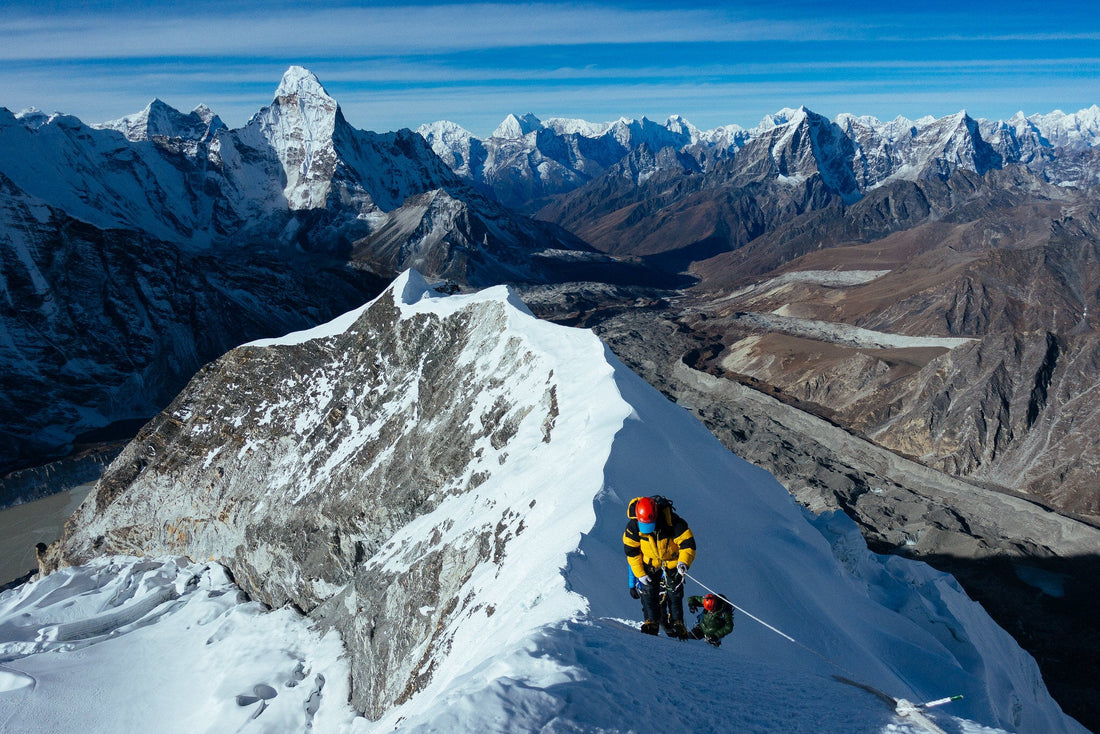
Granite Genes: The Science Behind 50+ Climbers' Superhuman Adaptations
Share
Introduction: The Ageless Ascent – How Older Climbers Defy Biology
Rock climbing is often seen as a young athlete's game, yet an increasing number of climbers over 50 are performing at elite levels. What's their secret? Emerging research suggests that long-term climbers develop unique physiological and genetic adaptations that slow aging and enhance performance.
In this article, we explore the science behind superhuman climbers in their 50s, 60s, and beyond , uncovering how muscle memory, tendon resilience, and even DNA play a role in their enduring strength.
1. The Physiology of Aging Climbers: Why They Stay Stronger Longer
A. Muscle Retention & Slow-Twitch Fiber Dominance
-
Unlike most sports, climbing relies heavily on isometric strength (static muscle contractions), which declines slower with age than explosive power.
-
Long-term climbers maintain slow-twitch muscle fibers , crucial for endurance, better than non-climbers.
-
Studies show veteran climbers retain 90%+ of their grip strength well into their 50s.
B. Tendon & Ligament Adaptations
-
Decades of climbing thicken tendons , making them more resistant to injury.
-
Research on elite older climbers reveals enhanced collagen synthesis , keeping connective tissues supple.
C. Joint Preservation Through Controlled Loading
-
Unlike high-impact sports (running, basketball), climbing strengthens joints without excessive wear .
-
Controlled stress on cartilage may delayed osteoarthritis in hands, elbows, and shoulders.
2. The Genetic Edge: Are Some Climbers “Built Different”?
A. The “Climber Gene” (ACTN3 & Beyond)
-
The ACTN3 gene , linked to explosive power, is less relevant in climbing than endurance genes like ACE I/D .
-
Some older climbers show unusual fast-twitch fiber retention , possibly due to genetic factors.
B. Telomeres & Longevity
-
Intense physical activity (like climbing) may slow cellular aging by preserving telomere length.
-
A 2022 study found that lifelong climbers had longer telomeres than sedentary peers.
C. Pain Tolerance & Neurological Adaptations
-
Veteran climbers develop higher pain thresholds from years of finger strain.
-
The brain rewires to optimize movement efficiency , reducing wasted energy.
3. Training Secrets of 50+ Elite Climbers
A. Focus on Recovery & Mobility
-
Older climbers take priority active recovery (yoga, stretching) to maintain flexibility.
-
Eccentric training (controlled negatives) helps prevent tendon injuries.
B. Technique Over Raw Strength
-
Decades of experience lead to ultra-efficient movement patterns , conserving energy.
-
Many elite older climbers rely on balance and footwork more than brute force.
C. Mental Resilience & Risk Management
-
Years of climbing cultivation superior problem-solving skills on the wall.
-
Older climbers often climb smarter, not harder , avoiding burnout.
4. Can You “Train” These Adaptations at Any Age?
A. Starting late? It's Not Too Late
-
Studies show climbers who start after 40 can still achieve high grades (5.12+/V6+).
-
The key is consistent, injury-aware training .
B. Anti-Aging Benefits for Non-Climbers
-
Grip strength is a strong predictor of longevity —climbing helps maintain it.
-
Hanging exercises (like dead hangs) may mimic some benefits.
Conclusion: Climbing – The Ultimate Anti-Aging Sport?
Science confirms what veteran climbers already know: Years of climbing reshape the body and brain in ways that defy typical aging . From genetic advantages to tendon resilience , older climbers are living proof that strength doesn't have to fade with age .
Want to climb strong into your 50s and beyond? Focus on smart training, recovery, and technique —your future self will thank you.